Achievements of Ancient India
The list of achievements in ancient India is very long. It is difficult to put all of them together in one place. Here are some of the accredited achievements of ancient India as well as ancient Indian inventions for a glance reading. The top 3 achievements of ancient India are YOGA, AYURVEDA and CHESS because they are still relevant and serve people all over the world for their well being Spiritual, Physical and Mental.
Ancient Indian Achievements - Indus Valley Civilization
While the rest of the world was still in the pre historic age and living in the nomadic culture, India boasts to have the most advanced civilizations of the world. The cities of Mohenjo - Daro and Harappa had very advanced sense of town planning and urban landscape.
The discovery of scales suggests mathematical knowledge of the Indus people. The Indus civilization had a script of their own which means they could read and write. There were more than 600 picture letters and 60 original letters in the Indus script. The remains of a dockyard in Lothal in Gujarat testify the trade relations of Indus people with western Asia.
Ancient Indian Achievements - Vedic Period
Ancient Indian Language Sanskrit |
Sanskrit is the earliest and only known modern language. The first grammar book of Sanskrit written by Panini in 400BC called Astadhyayi. In this book the author describes rules of Sanskrit grammar. |
Ancient India Achievements in Medicine |
Ayurveda, the earliest school of medicine originated during the Vedic time. Ayurveda was developed by Charaka, considered to be the father of medicine. He consolidated his findings in his book Charakasmitha. |
Ancient India Achievements in Surgery |
Sushruta is called the father of surgery who conducted complicated surgeries. He compiled his findings in the book Sushrutasamitha. |
Yoga - Ancient Indian Exercise |
Yoga was developed by Patanjali, a revered sage in ancient India. It is a form of physical exercise to control diseases. |
Leprosy in Ancient India |
The mention of leprosy, as well as ritualistic cures for it was first described in the Atharva - veda (1500–1200 BCE). Later the treatise Sushruta Samhita (6th century BCE) also mention of leprosy. |
Ancient Indian Achievements in Mathematics |
The first notions of zero as a number and its uses have been found in Mathematical treatise of ancient India. Brahmagupta gave a full account of the Hindu numerals with its digits 0,1,2,3,...,9 and decimal. Algorithm is an invention of ancient India. It ultimately became the scheme of numeration by making use of the Indian numerals. |
Ancient Indian Achievements in Astronomy |
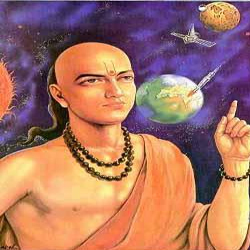
Aryabhata, (c. 500AD) was the earliest person known to have done precise celestial calculations. He accurately calculated celestial constants like earth's rotation per solar orbit, days per solar orbit, days per lunar orbit. He talked of the diurnal motion of the earth and the appearance of the Sun going round it as early as the sixth century. |
Taxila - Ancient Indian University |
Takshila, establish in 700 BC holds distinction of being world's first university in the world. |
Nalanda - Ancient Indian University |
Nalanda University was built in the 4th century BC. It was one of the greatest centers of learning in ancient India. |
Buddhism & Jainism - Ancient Religions of India |
Two major religions, Buddhism and Jainism were established in India in 500 and 600 BC, respectively. |
Kallanai dam - Ancient Dam of India |
Kallanai dam built on the Kaveri River by the Chola king Karikalan in 2nd Century BC is the oldest dam in the world. |
Ancient Indian Epic Mahabharata |

Mahabharata the famous epic is the longest poem in the world. |
Ancient Indian Games - Chess |
One of the major ancient Indian inventions is Chess. Chess was invented in ancient India and was known as Ashtapada. Ashtāpada was the board game which predates chess. It was mentioned on the list of games that Gautama Buddha would not play. Around the 6th century during the Gupta period it was called Chaturanga. |
Ancient Indian Games - Kabaddi |
The game of kabaddi originated in some form or the other during the period between 1500 and 400 BCE. |
Ancient Indian Games - Ludo |
Ludo called Pachisi originated in India by the 6th century. The earliest evidence of this game is the depiction of boards on the caves of Ajanta. |
Ancient Indian Games - Snakes and ladders |
The board game of Snakes and ladders originated in ancient India as a game based on morality. |
Cashmere Wool in India |
The woolen shawls made from wool in Kashmir region of India find written mention between 3rd century BCE and the 11th century AD. The fiber extracted from sheep hair was known as pashm or pashmina and was used in making handmade shawls of Kashmir. |
Ancient Indian Agriculture - Cotton Cultivation |
Cotton was cultivated by the inhabitants of the Indus Valley Civilization by the 5th millennium BCE - 4th millennium BCE. |
Origin of Iron Working in Ancient India |
Iron works were developed in the Vedic period. Archaeological sites show iron implements in the period between 1800 BCE—1200 BCE. Spikes, knives, daggers, arrow-heads, bowls, spoons, saucepans, axes, chisels, tongs, door fittings etc. ranging from 600 BCE to 200 BCE have been discovered. In the time of Chandragupta II Vikramaditya (375–413 CE), corrosion-resistant iron was used to erect the Iron pillar of Delhi, which has withstood corrosion. |
Sugar Refining Process India |
The process of producing crystallized sugar from sugarcane was discovered by the time of the Guptas rule. Chinese documents confirm at least two missions to India, initiated in 647 CE, for obtaining technology for sugar-refining. |
Horse Toe Stirrup |
Buddhist carvings in the temples of Sanchi, Mathura and the Bhaja caves dating back between the 1st and 2nd century BCE figure horsemen riding with elaborate saddles with feet slipped under girths. |
Ancient Indian Stupa |
The origin of the Stupa can be traced to 3rd century BCE. It was used as a commemorative monument associated with storing sacred relics. |
More Details on achievements of India »
Contribute More Facts